
Full removal for a ruined layer
This fits an attic where the insulation is soaked, moldy, burned or torn up by pests from one end to the other. Taking it all out lets us see the whole attic and start the new insulation on clean, sealed framing.
If your old insulation is soaked, moldy or torn up by pests, we take it out so the new layer goes over clean, sealed framing.
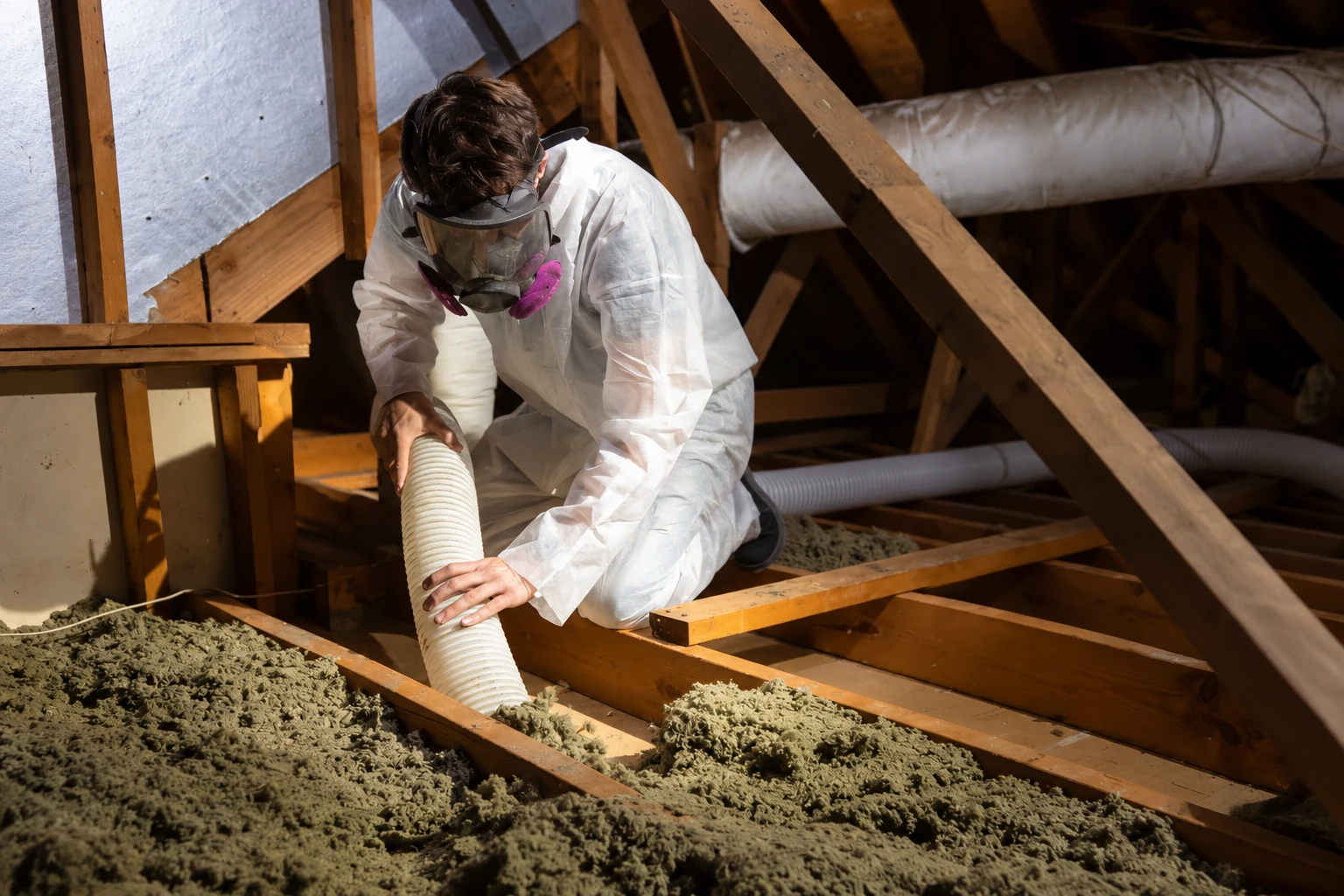
Insulation removal in Laredo takes out old attic insulation that's been ruined by water, mold, fire or pests, so the space underneath can be checked, sealed and insulated again instead of hidden under a fresh layer.
Most people call because the upstairs won't cool down or the power bill keeps climbing, and then they look through the attic hatch and see insulation that's stained, flattened or chewed up. The price comes down to the size of your attic and the type, amount and condition of what's up there. The schedule turns on those same things, plus how easy the attic is to move around in. Your estimate is written out so you can see what's included, and if the old layer turns out to be fine, it may only need attic insulation added on top.
I come out myself, climb into the attic and write the estimate based on what I see there. Then I work alongside our small crew on the job, so the person who decided what stays and what goes is up there making sure it happens.
I traded a desk job for attic work, which mostly means I traded a cold office for a hot one. I learned insulation on another contractor's crew. We started our own business in 2023, and attics are what we're best known for.
We're licensed and fully insured, and the work is backed by our satisfaction guarantee. If you've got a hot room or an attic you're not sure about, call (956) 508-9070 or send the form on this page and I'll come take a look.
We reply within one business day, and the estimate is free, done at your property and comes with no obligation. I come out, look at the attic and write the estimate out so you can see what's included. If you know roughly how big your attic is, or you've noticed mold, water damage or pests up there, put it in your message.
In Laredo, the contractor you hire typically pulls the permit, and if you pull it yourself, the city treats you as the contractor on the project. Whether a removal job needs a permit is a question for the city's Building Development Services. When a job does need a city permit, we pull it as your contractor and handle the paperwork. The city also requires anyone doing work in Laredo to be registered with its office. Its permit resources also cover ceiling insulation requirements for this climate zone, which is worth asking about before new insulation goes back in.
Asbestos is the one kind of old material that changes how the job ends. Under state rules, thrown-out material containing asbestos is special waste that may need special handling, packaging and transport by a registered transporter, which is one more reason vermiculite goes to an asbestos contractor. If your building is a public one, the state health department also requires the people and companies doing asbestos work there to be licensed or registered. Across Laredo and the cities around it, attics run hot most of the year, so a soaked or flattened layer shows up fast as a hot upstairs, a warm room over the garage and a bigger power bill.
No, insulation that's still in good condition can stay, and new insulation can go right over it. The key is having a professional judge the old layer first and decide whether it needs to come out all the way, in part or not at all, before you plan a full tear-out. We make that call on the estimate visit.
Removing old attic insulation usually costs about $1 to $2 per square foot across the US. That range is for dry insulation in good shape with no asbestos, with blown-in insulation near the low end and rigid types near the top. Your own price depends on your attic's size and the type, amount and condition of what's up there.
National cost guides put removing old attic insulation at anywhere from about 4 hours to 2 days or more. Where a job falls in that range depends on the attic's size and how complicated the work is. A large attic, or one that's tight and hard to move around in, usually lands at the longer end.
Leave it alone and hire an asbestos contractor, because the EPA advises a professional asbestos contractor whenever work would disturb vermiculite in the attic or walls. For asbestos work, the EPA describes the work area being sealed off from the rest of the house with plastic sheeting and duct tape, with the heating and air conditioning turned off. Family members and pets stay out of the area until the work is done.
Clear storage boxes, personal items and valuables out of the attic, and make sure the hatch and the path to it are easy to reach, since the equipment has to come through there. If you've seen mold, water damage or signs of pests, show us those spots so we look at them closely before work starts.