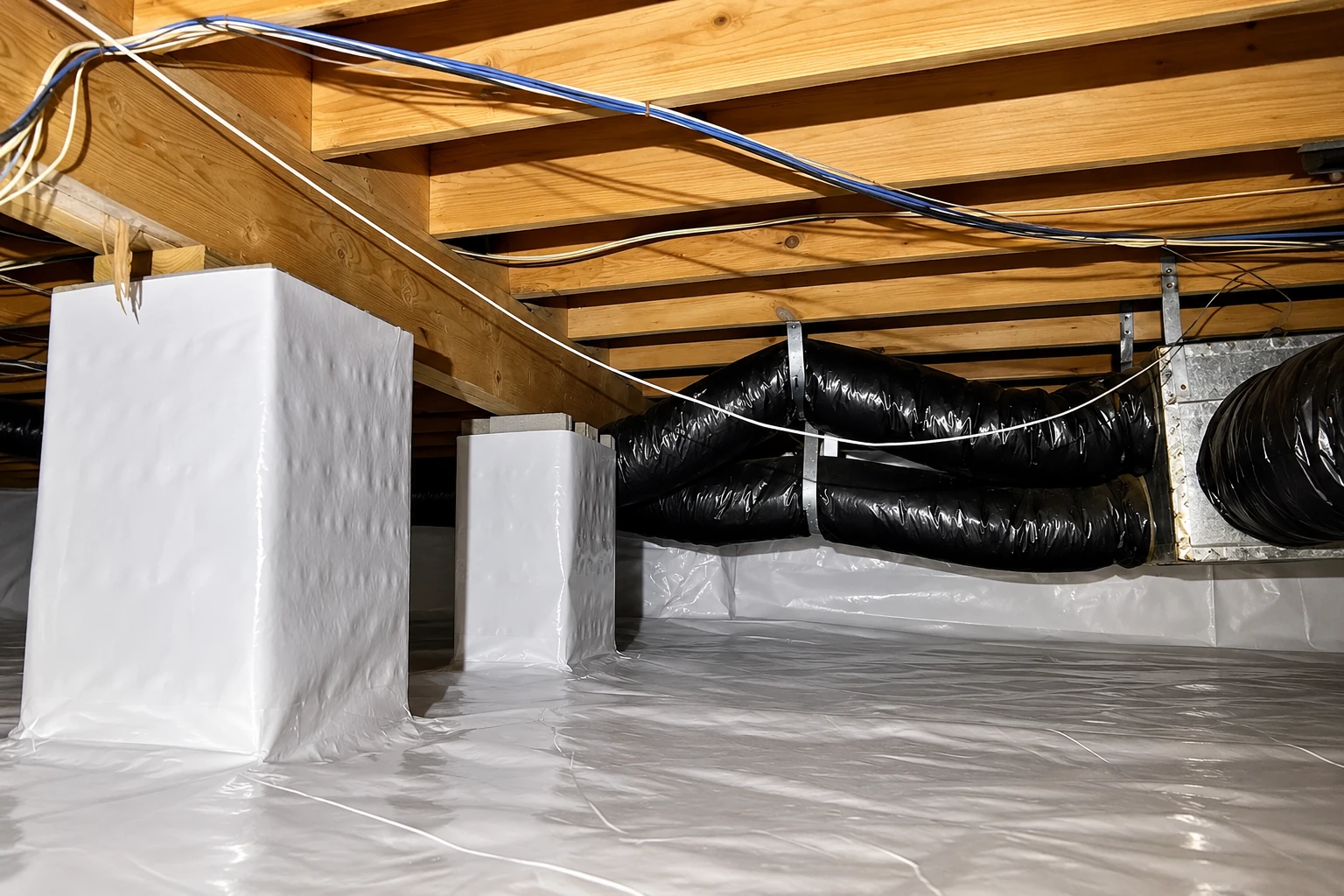
Before anything goes in, I get under the house with a light and look at what sits down there, including ductwork, AC equipment, plumbing lines and whatever insulation is already in place. You can insulate the floor or seal up the walls, and what's down there decides which one makes sense, so we pick it together after I've looked. If the old batts are soaked, sagging or full of droppings, we pull them out first, because new material over a mess just keeps the problem. Then we close the gaps around pipes, wires and the edge of the floor framing, since insulation can't do its job with a draft blowing through it. The insulation goes in last, even all the way across, with no thin spots at the edges where corners usually get shorted.
Crawl space work often ties into the rest of the house. If the rooms above also have thin outside walls, wall insulation is worth looking at while we're already working on your house. When drafts are coming from more places than the floor, our air sealing services go after the gaps in the rest of your home.
Insulating the floor above the crawl space
This suits a vented crawl space with no ducts or AC equipment down there and plumbing lines we can protect. It's usually the simpler job, because the crawl space stays outside the house and we only work on the floor above it.
Sealing and insulating the crawl space walls
If your ductwork runs under the house, I lean this way, because otherwise your cooled air travels through a space left outside the house. It usually costs more and changes how the house breathes, so the air inside gets looked at as part of the plan.