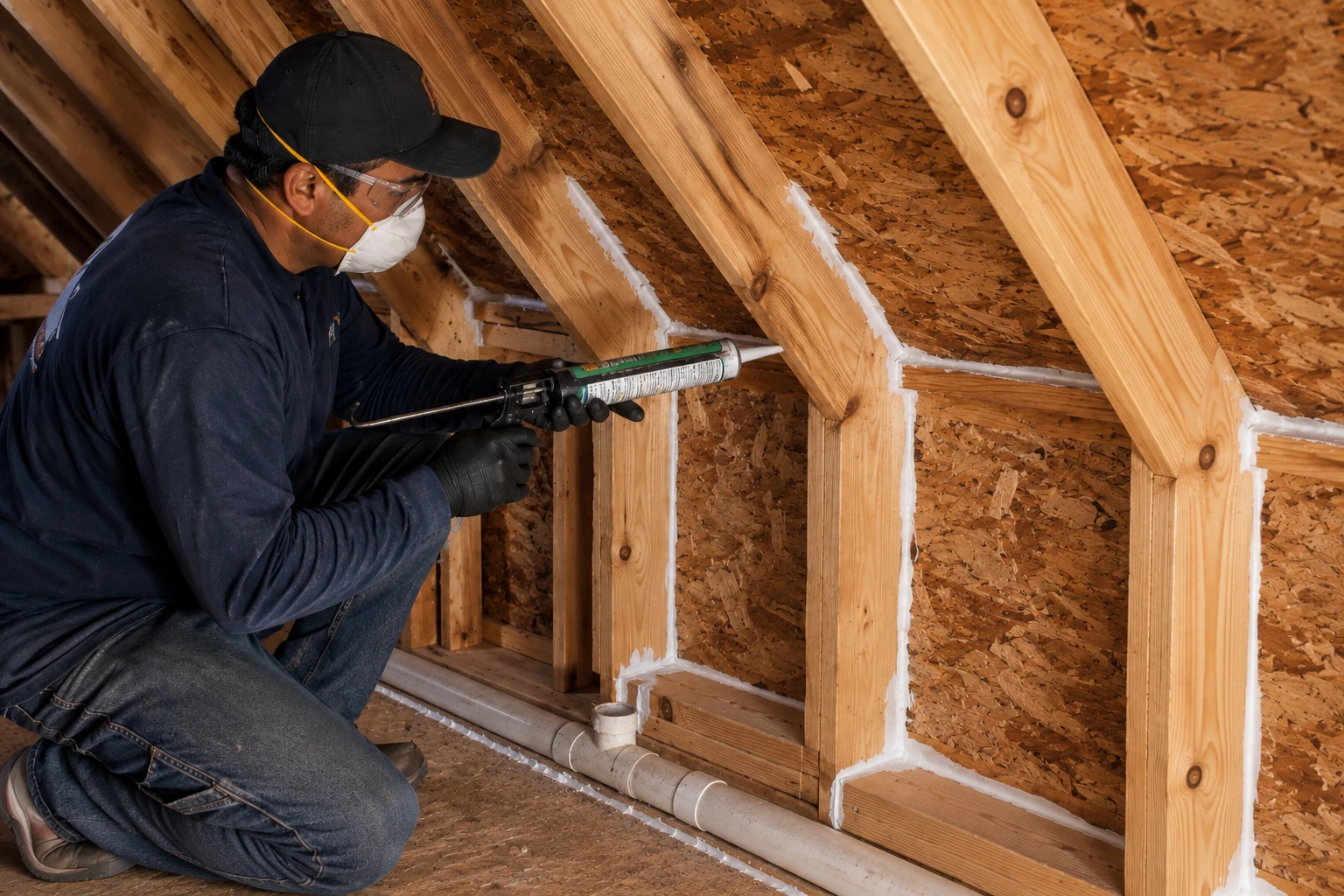
I start in the attic, because a few things have to be checked before anything gets sealed: live knob and tube wiring, vermiculite insulation, the loose gray-brown pebbly kind, bath fans that blow straight into the attic, roof leaks, and gas fireplaces or kerosene heaters with no vent. Then I work out how your house will get fresh air once it's tighter, because sealing first and thinking about it later is how a house ends up with stale, damp air. Finding the leaks is most of the job, so after we handle the easy ones around doors and pipes, our crew pulls back the old insulation to get at the gaps hiding under it, around can lights, the attic hatch, the holes for plumbing and wiring and the tops of the walls. We seal those with caulk or foam, set the insulation back so the edges aren't left thin, and keep the eave vents clear so the attic can still breathe.
Sealing usually runs into the insulation work around it. If your house has a basement or a room dug below grade, the spot where the framing sits on the foundation leaks much like an attic does, and we can seal it as part of basement insulation. Closed-cell foam insulation, a dense foam that also blocks moisture, seals and insulates in one pass but costs more, so I usually point you to it when the ductwork lives up in the attic. Otherwise, sealing the gaps and topping up loose fill gets you more for the money.
Sealing the leaks you can see
This suits a house where the drafts are obvious, around door frames, a few pipes or a bath fan, and the attic insulation is in decent shape. It costs less and goes quicker, but it leaves whatever is hiding under the insulation alone.
Whole-attic sealing under the insulation
This suits a house with a hot upstairs or a room that never comes around, because those leaks are usually buried under the insulation. We open up the attic, seal what we find and put the insulation back even, which is what an uncomfortable room usually needs.