
Seal and top up with loose fill
This suits most attics where the old insulation is dry and clean, just thin or patchy. We seal the gaps and blow fresh fill over what's there, which usually gets you the most for your money.
Hot upstairs and a power bill that keeps climbing? We seal the attic gaps, then blow insulation in evenly so your rooms stop fighting the heat.
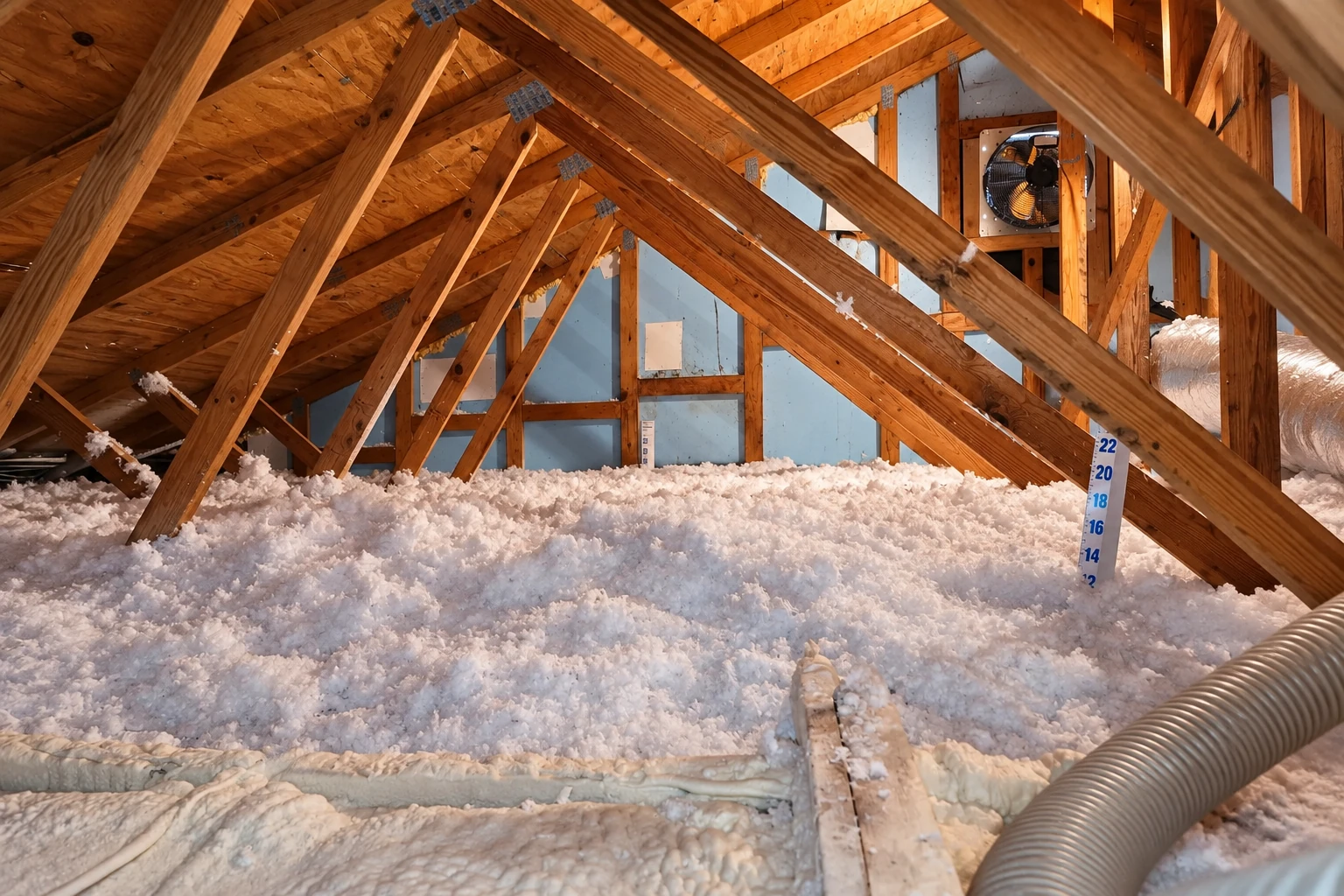
Blown-in insulation is loose fill blown through a hose over your ceiling, so the heat building up in a Laredo attic has a thicker blanket to get through before it reaches your rooms. For most attics we see in Laredo it's the right call, as long as the gaps get sealed first.
Most calls start with a bedroom that's hot upstairs, the room over the garage that never cools down, or a power bill that won't quit climbing. The price comes down to the size of your attic, how many inches are already up there, how many gaps need sealing first and whether any old material has to come out. The schedule turns on the same things, plus how easy the attic hatch is to reach and whether the job needs a city permit. The estimate I write out shows what's included, so you're not guessing at your own number. We're based in Laredo and work in Laredo and the cities around it.
I come out myself, go up through the hatch and write the estimate. On install day I'm up in the attic with our small crew, so the person who walked your attic with you is the same one holding the hose.
I spent years at a desk before deciding I'd rather work with my hands. The attic is a hotter office, but at least you can see whether the work got done. I learned on another contractor's crew and started our own business in 2023.
We're licensed and fully insured, so a crew working over your ceiling is covered. If your attic needs a roofer or an electrician before we start, I'll tell you plainly. Call (956) 508-9070 or use the form to set up a visit.
We reply within one business day. I come out for a free on-site estimate, look over your attic and write out exactly what's included, with no obligation to go ahead. If you know roughly how big your attic is and whether you're an AEP Texas customer, have that handy when you call (956) 508-9070 or fill out the form.
Whether a blown-in job in Laredo needs a permit isn't settled by the city's list. The city's permit page names mechanical, plumbing, electrical, irrigation and mobile home permits for licensed trades, and insulation isn't on it, so Building Development Services is the office to ask. When a job needs a city permit, we pull it as your contractor and handle the paperwork with them. You can pull one yourself, but then the city treats you as the contractor on the project. The city also expects building work to follow the residential and energy codes it lists, and its building official has posted a policy update on ceiling insulation requirements, which I'll go over against your house at the estimate.
Most of the calls we get in Laredo come down to the same thing, a house that can't keep up with the heat coming down through the ceiling. We find thin spots at the edges, insulation spilled into the eaves and gaps nobody sealed, and an even fill over sealed gaps usually takes care of most of it. We do the same work in the cities around Laredo, and our insulation work across Laredo page covers the rest of what we do here.
Usually, yes. Blowing loose fill into an attic generally costs less than laying batts, the blanket-style pieces, and it covers better because it fills in around joists, wires and odd corners instead of leaving seams. Prices still vary from house to house, which is why I measure before quoting.
Across the US, turnkey attic insulation, fully installed, usually runs about $1,500 to $3,500 for a 1,000 square foot attic. That's a national figure, not our price, and yours moves with your attic's size, how much is already up there and how much sealing it needs. The written estimate spells out what's in it.
Ask for air sealing, closing the gaps between the house and the attic, to show on the quote as the first step, with the insulation going in after it. The depth should come out as even as possible, with baffles at the eaves so the airflow along the roof edge keeps working. The finished insulation should meet or exceed the levels current building codes require, and that's the order we follow, as described above.
Both are common, so the better question is how deep it goes. The cellulose makers' group says theirs is made from recycled paper and cardboard, with boric acid added to slow fire and keep bugs out. A fiberglass industry fact sheet says cellulose blown only to its labeled settled thickness may lose some of its ability to slow heat as it settles, so if you pick cellulose, ask how deep it will go compared with that labeled number.
Possibly, if you're an AEP Texas residential customer. AEP Texas pays incentives to participating contractors who install insulation, and you get started through a contractor the program has approved. Its Hard-to-Reach program is for residential customers with household income at or below 200% of federal poverty guidelines, or in approved government programs.